

#HumanMade - a certification system to make it economically possible for artists to continue to do their art, in the face of AI
PART TWO: How such a system might be implemented

This is the second part of a talk I gave at DokuTech in August 2025 – the high-level “how” of implementing a labelling and certification system for music, writing and art made by people. The first part dealt with the “why.”
--
An existential threat can be an existential opportunity.
I keep coming back to the basic idea that in a sea of flawless, perfect “content,” people will crave what feels inherently human. Well, some people. Many won’t care enough to know the difference - which is tragic but that is not a battle I’m willing to take on.
Many people smarter than me have been saying this, increasingly loudly:
Virginia Dignum, for example, is a computer scientist at a university in Sweden and another in the Netherlands. She advises the EU and the World Economic Forum on AI ethics. Virginia said:
“ Signals of authenticity will soon matter more than content.”
This is Madeleine Schulz writing in Vogue Business:
“In a world that’s gone a bit numb, dubious and algorithmic, craft feels humanist, sensual and true … craft and provenance are essentially the way to prove value.”
Krzysztof Pelc is a professor of International Political Economy, and this is worth reading slowly:
“Research suggests that people tend to prefer art they believe is human‑made ... This ‘authenticity’ will likely become increasingly prized, with consumers seeking works that reflect individual human vision and passion.”
And research on the subject is indeed very interesting. This is from a Columbia Business School study that was a month old when I gave my talk:
“Rather than diminishing human creativity, the presence of AI-generated art can actually enhance the perceived value of human-made work.” And “Even in a market affected by AI art, human artists may be able to preserve their pricing by drawing clear distinctions between their work and AI-generated pieces”
One of the authors of the study said this:
“I’m waiting for the day when I’m scrolling through my algorithm and see a ‘Verified Human Content’ label.”
It seems, the real, and the authentic and the human really is gaining in value, and will continue to do so. So we will need ways to tell the real stuff from the synthetic stuff - art from synthetically produced content.
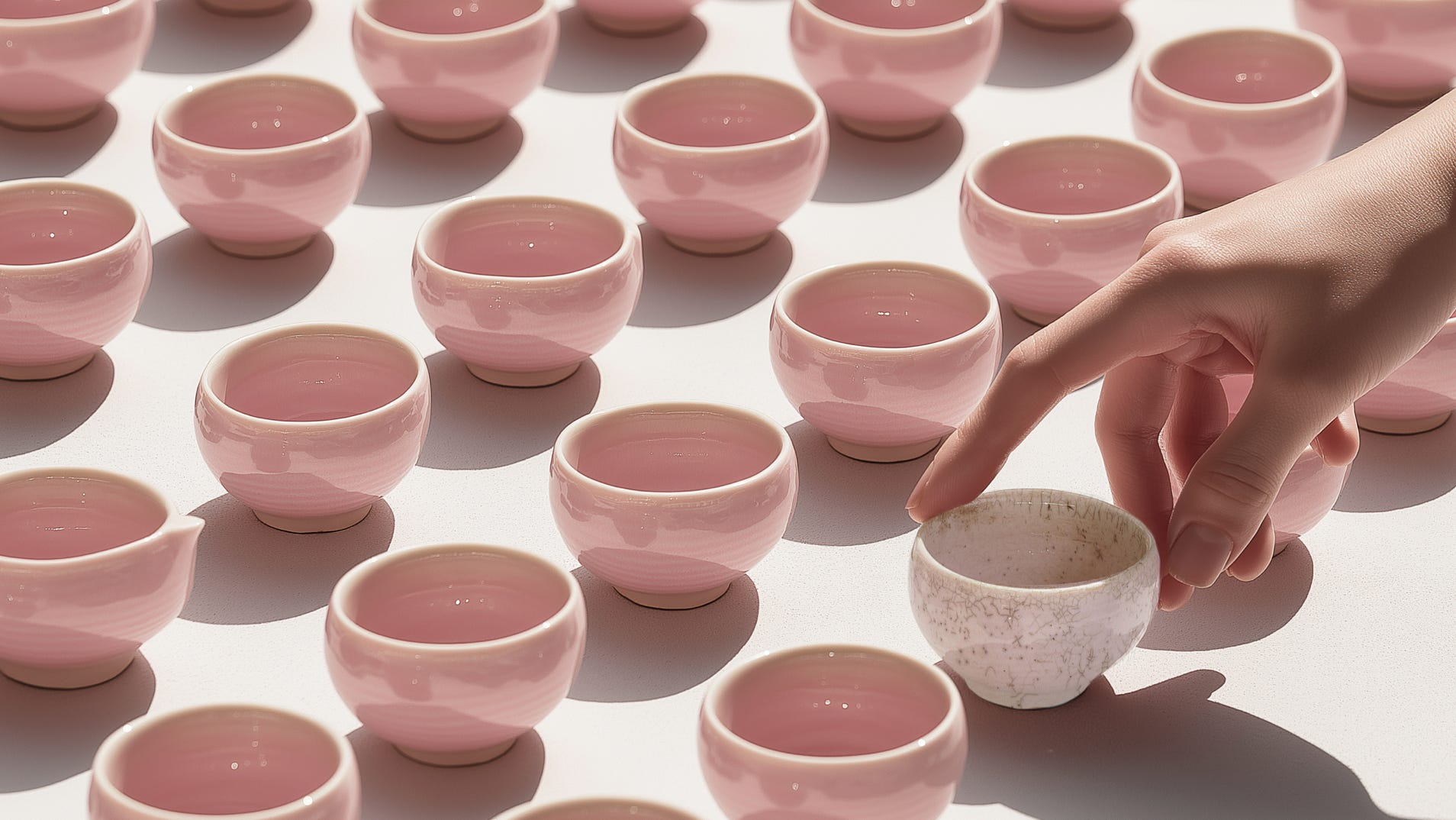
It is important to note, that in the existential stakes of making a living – or not – many artists have been inventing new ways to engage their audiences. Of course. It’s what artists do. Bringing their art to the people is what artists have done since time immemorial. But for the relatively brief interlude of technologically enabled intermediation and the resulting mass market opportunities of recorded music, transmitted images, and printed words, artists have relied on the face-to-face, and will continue to find new means to accomplish close contact with their fans and readers, now that technological intermediation is under thread from technological replacement.
So, premium experiences – live gigs, closed-door readings and discussions, master workshops and all such similar formats which have been very much part of the artist’s revenue portfolio – are already entering a new renaissance. These will only continue to grow in prominence and importance, but we’re here to look at methods of countering, or at least slowing down, the parallel phenomenon of a drowning out of the real by the synthetic, produced at a volume with which the real simply cannot compete, if it tries to play the same game.
So, let’s define the problem and map out a likely solution, shall we? As visual art, music, writing, and design can now be convincingly generated by machines, the distinction between human-made and machine-generated content is blurring, often invisibly to audiences and buyers.
Consumers, collectors, institutions, and funders may struggle to discern the origin, labor, and ethical framework behind cultural objects. Market confusion ensues, loss of trust follows. Or perhaps the other way around. Certainly hand in hand. As I mentioned in the first part:
“The worry is that democratisation in the broad context that surrounds us means merely that more people can do more work that pretends to be good.
Or indeed pretends to be work. This leads to a necessary lowering of value for any of the work thus produced, and - by virtue of market economics - right along with it, of most of other work that looks like that.
So how is democratisation leading to a lowering of value a good thing?
Of course, when the marginal cost of producing another song or another piece of visual art nears zero, what’s the perceived value of ANY song or piece of visual art?”
Maybe people don’t care. Even if critics have been banging alarm bells about the cultural implications of this for a long time, including Ted Gioia on Substack.
Let’s also not forget, future generations deserve clarity about the human meaning embedded in the art and culture they inherit.
We need a certification and labelling system. A certification or registration system for human-made art, a sort of “hallmark for human creativity”.
This could become a key pillar in the evolving cultural policy framework, as synthetic content floods the cultural space.
A labelling system which would:
Affirm cultural labour as something worthy of recognition and protection, not just monetisation.
A system that would reinforce public trust in cultural objects by providing provenance, authorship, and context.
Enable policy tools such as tax breaks, grants, and visibility algorithms to support verified human-made work.
Offer creators agency in how their work is labelled, distributed, and monetised.
For it to work, it would likely need to be:
Voluntary and creator-driven, not enforced or restrictive. Certification increases value, and drives adoption.
Administered by trusted cultural institutions or NGOs, not tech platforms. We’ve seen what self-governance by the tech giants looks like. We’re interested in using technology to build trust and recognition, not to drive shareholder value.
Supported by metadata standards, blockchain records, open registries - the technology exists.
It could have tiers:
“Human-Created”
“Human-AI Hybrid with Author Disclosure”
“AI-Generated Without Human Intervention” - whether there would be uptake for this label, we would need to see.
Think of it as a sort of Creative Fair Trade: a mark of authorship, care, and ethical labour. Implementation scenarios could look something like this:
Arts councils or culture ministries could develop standards in partnership with creators and collectors. Government-level involvement bestows legitimacy
Digital platforms and marketplaces (e.g., Etsy, Bandcamp, Substack, Patreon) could integrate certification layers, helping users filter by human-authored work.
Museums, festivals, and granting bodies could require disclosure of generative methods as part of application or acquisition processes.
Collectors and buyers could use it as a filter for authenticity and provenance, much as they do for organic food or conflict-free materials.
There are potential risks, of course.
To begin with we need to avoid restricting artistic freedom by a sort of gatekeeping.
The system needs interoperability across sectors - visual, music, literary, etc.
It risks being co-opted or “gamed” if controlled by platforms or commercial interests, so we need to design that co-option out of it
Should not stigmatise AI-assisted processes that are transparently and creatively used.
Such a system would serve as a symbolic reaffirmation of human authorship in the algorithmic age
It would be a practical tool for navigating a cultural landscape flooded with synthetic art objects. It would be a policy anchor around which support, funding, and visibility could be meaningfully attached
If culture workers are a society’s symbolic infrastructure, then a human-made certification is one way to tag - and preserve - that infrastructure before it is overwritten.
Can this be done? Of course. The technologies actually already exist. If we marry up the blockchain world, the industrial strength database world, and the arts administration world, and add political will across organisations and intergovernmental bodies, then all we end up with is a reasonably complex logistical problem and a not particularly difficult technological problem. In short, a design problem. And we have the knowledge, and the people to get it solved.
Efforts to get it done are being undertaken all over the place right now, with varying degrees of determination, sophistication and impact.
Of course, there are already many out there who have smelled a quick buck to be made and are offering to provide provenance to artists for a smaller, or larger, fee. Whether or not that provenance has the necessary underlying qualities of survivability, universality of access and extensibility is questionable. Probably the most interesting effort I have seen is a film festival and initiatives which surround it, by the actress and film director Justine Bateman – positioned squarely in opposition to any generative tech being used for anything other than a flourish here and a slight correction there.
And we need to talk to the engineers. The IEEE, the world’s largest professional association of engineers, has been thinking about the subject of ethics in the age of Ai for a good long time. For instance, my friend John Havens, whose work is very much focused on the ethics of making AI systems that are in the service of humanity - not the other way around. (John’s actually got a double life as an actor and a fine blues player.) This article is a good source about people working in this field.
All this means that effort is being expended and sooner or later such a universal certification system will be in place. Over the ages, we’ve done it with serial numbers for appliances, food labelling and certification of chemicals fit, or unfit, for human consumption. With rights management, copyright registration and complicated licensing agreements.
Of course, these things have been around for a while, but there was a time when they were not. We are now at such a juncture in time in terms of inventing certification of human-made artwork.
The stakes are growing fast, the probability of failure is high and the level of effort and coordination is non-trivial, but at the bottom of all this lies a simple premise - artists need to be able to continue to make a living out of their art, or else our civilisation is going to be in trouble.
No pressure now. Let’s get to work.
--
In the time it has taken me to shake off the dust of travel, fire up the laptop to catch up with outstanding correspondence, and edit the talk into two easier-to-read pieces, the world has moved closer to a scenario where the calamity I can see unfolding is a step or three closer. At the same time, platforms have been implementing measures to contain the rabid spread of content masquerading as art. All this activity means that the time to invent a universal system of labelling #HumanMade art is very much now.